Home / Automatic Doors / DDA Compliant Doors
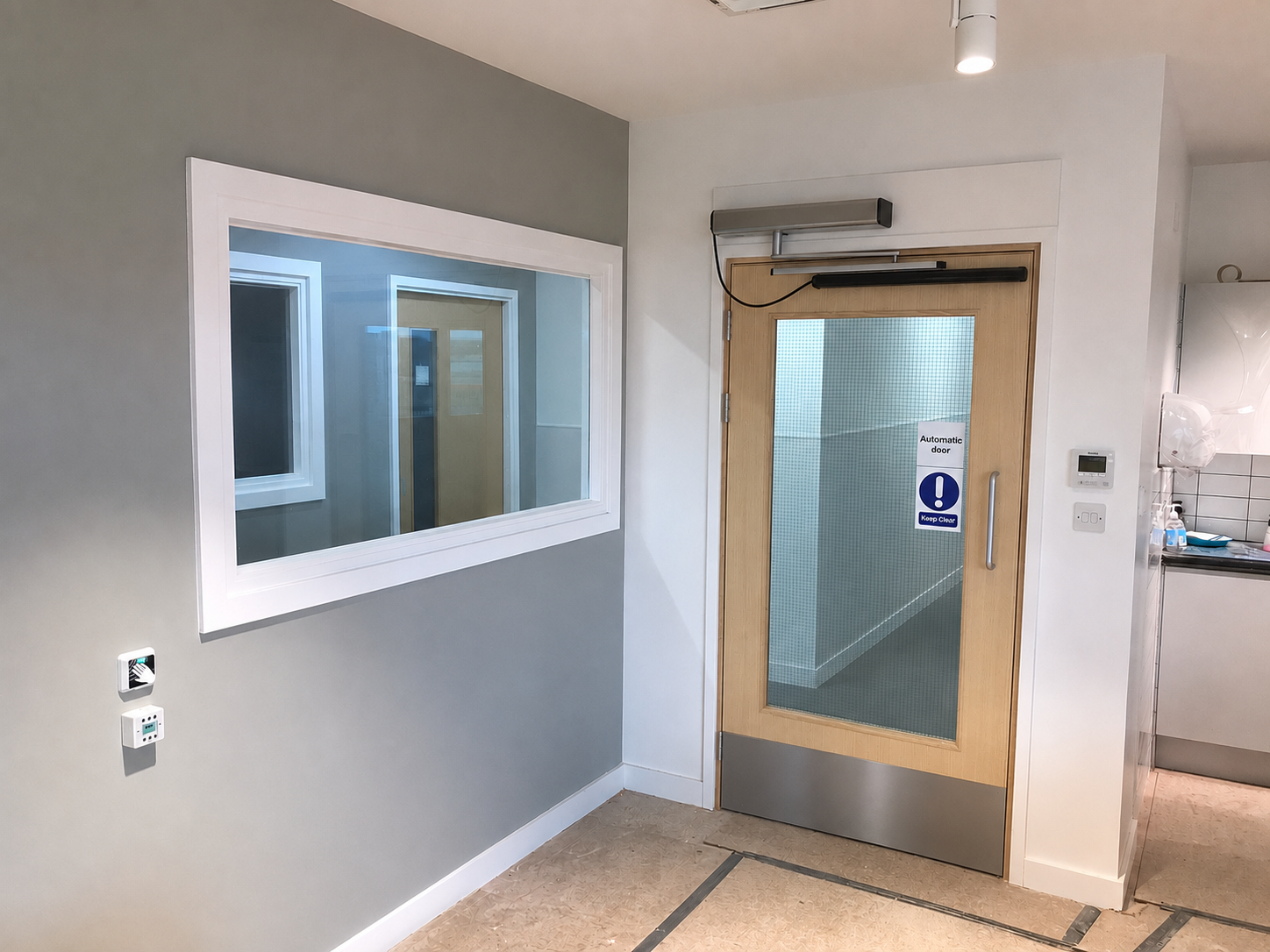
Playing an important role in creating safe, accessible and inclusive buildings, automatic doors for disabled access provide a convenient and practical solution for people with mobility needs.
Whether you’re upgrading an existing doorway or designing a new building, a professionally specified DDA compliant door can provide easy access for everyone.
Although the Disability Discrimination Act (DDA) was replaced by the Equality Act 2010, the term “DDA doors” remains widely used throughout the industry to describe automatic door systems designed for disabled access.
The Equality Act 2010 places a legal duty on organisations to make reasonable adjustments to premises to ensure people with disabilities are not placed at a disadvantage or prevented from accessing buildings and facilities. It applies across almost every type of premises including workplaces, housing, shops, healthcare, education and leisure facilities.
The technical standard BS 8300-2:2018 (design of an accessible and inclusive built environment) and the Building Regulations Approved Document M (access to and use of buildings) provide detailed design guidance.
Automatic doors make entering and moving through buildings easier for wheelchair users, people with limited mobility and visitors carrying pushchairs, bags or equipment. They can also be installed on internal doors, corridors and accessible toilet facilities to improve movement throughout a building. With swing, folding, telescopic and sliding automatic door systems available, there are flexible options for a wide range of commercial, public sector and heritage buildings.
The benefits extend beyond accessibility and compliance: removing the need to push, pull or manoeuvre around a manual door can reduce the risk of injury at busy entrances, while a well-specified DDA-compliant door helps make premises more welcoming. The most suitable disabled automatic door entry systems will depend on the entrance layout, building use and anticipated traffic levels.
There is no single product known as a “DDA door”. Compliance depends on whether an automatic door is designed, installed and maintained in accordance with the relevant technical standards. Well-designed automatic doors for disabled access will typically include:
Our experienced team works with architects, contractors and facilities managers to recommend DDA automatic doors and opening systems that meet accessibility, budget and operational requirements.
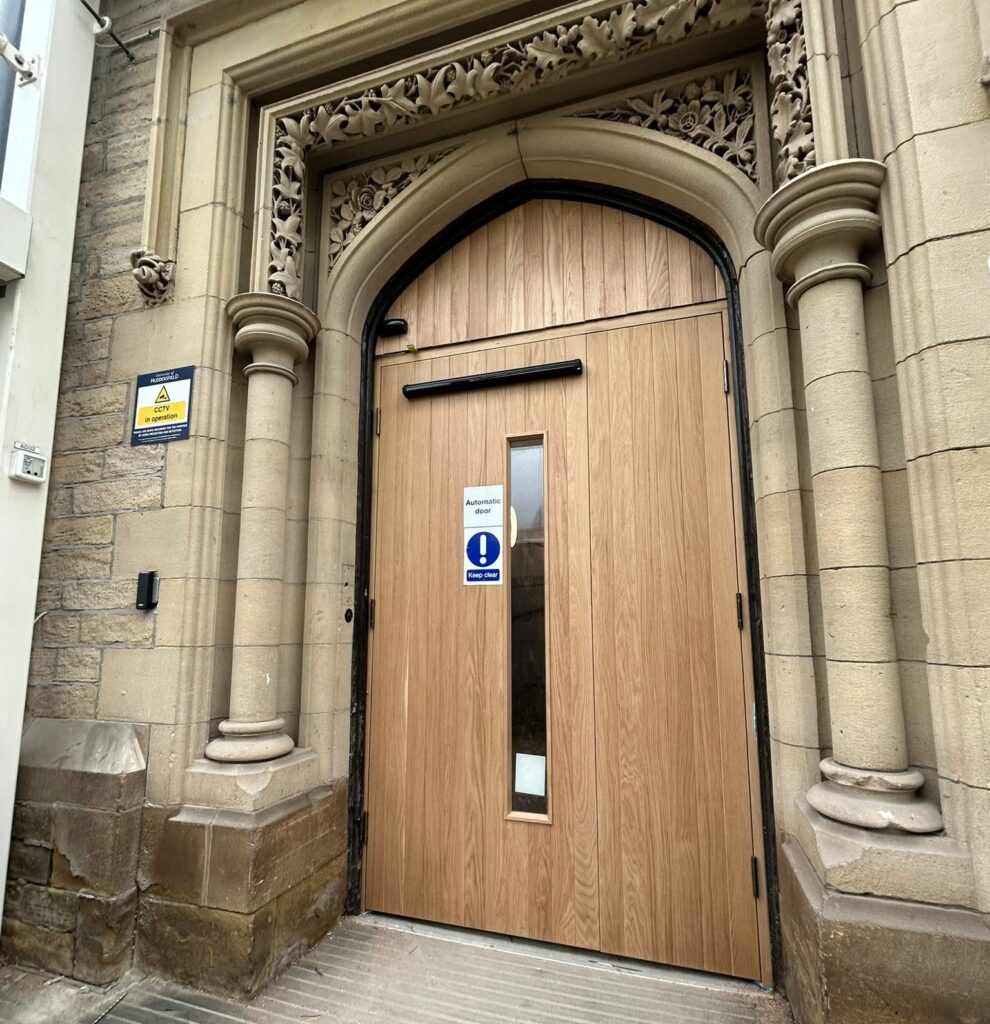
Improving disabled access doesn’t always require replacing the entire door set. Door operators can often be retrofitted to existing manual swing doors, helping premises overcome physical access barriers without major modernisation work. This can be particularly useful for places of worship and heritage buildings, where retaining existing doors may be important. Door operators can also provide a cost-effective way for other organisations to make reasonable adjustments.
Ongoing accessibility depends on an automatic door system continuing to operate safely and reliably after installation.
Our comprehensive service includes repairs and planned servicing to help keep systems performing effectively throughout their working life. Regular maintenance can help identify potential issues early, maintain safe operation and support the long-term performance of the system.